
March 16, 2026
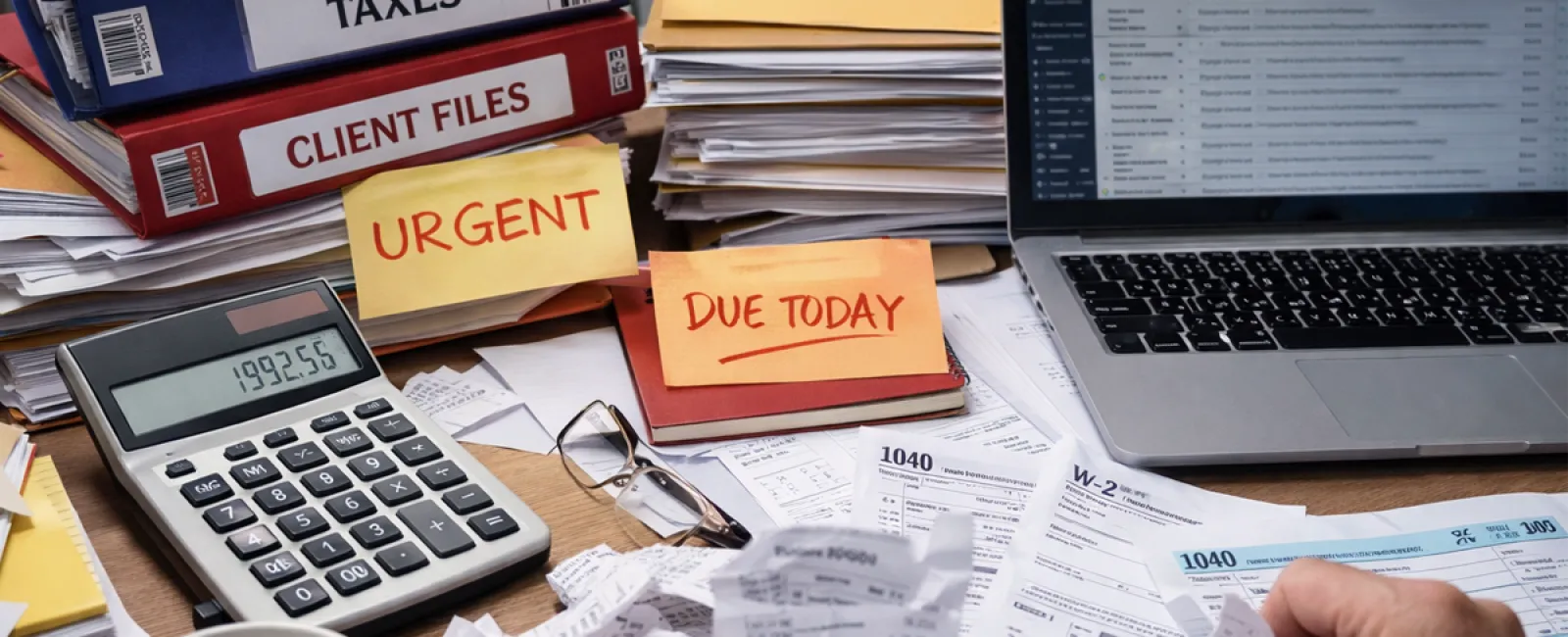
March marks the peak of tax season.
Accountants are overwhelmed. Bookkeepers rush to keep pace. Deadlines close in. And your inbox floods faster than anyone can manage.
Everyone's focus is on pushing through.
You know this well.
But so do cybercriminals.
Security experts report a sharp rise in phishing scams during tax season, observing about a 28% surge in tax-related scam emails in March compared to quieter times. These scams are subtle, disguised as routine business emails timed to exploit your busiest moments.
This isn't coincidence.
It's calculated timing.
Here's what to expect and four effective steps to protect your business from becoming an easy mark.
Managing the Chaotic Supply Chain
What most miss:
Hackers don't only target accounting firms.
They exploit the surrounding confusion.
During tax season:
- Clients hurriedly send sensitive paperwork
- Staff skip important checks to handle volume
- "Just send it over" replaces cautious protocol
- Verifications are often skipped due to time pressure
The entire workflow accelerates.
And speed creates opportunity for error.
Hackers target busy, pressured environments—not calm, methodical ones.
March is the peak of activity.
Typical Attack Scenarios
This isn't fiction.
It's a convincing email in your inbox.
- An email "from your accountant" requesting a resend of W-2s claiming transmission errors
- A vendor notification about a bank account change needing urgent update
- A DocuSign request for tax documents marked "signature needed today"
- An urgent "CEO" email from travel asking for immediate assistance
These messages appear routine.
That's why they succeed.
Why Busy Professionals Fall Victim
This isn't about negligence.
It's about human nature.
When inboxes overflow and deadlines threaten, people skim emails, make assumptions, and act quickly.
Cybercriminals exploit this behavior.
Their emails are crafted for fast movers who overlook subtle inconsistencies. They don't need recklessness—just busy minds.
In March, that's nearly everyone.
Four Easy Steps to Avoid Being an Easy Target
You don't need advanced tools or a security team to protect yourself.
Adopting mindful habits during peak periods is key.
1. Confirm payment changes with a trusted call
Received a vendor email about changed banking details? Don't reply directly.
Instead, call their verified number to confirm.
This simple practice blocks costly scams.
2. Resist rushing to send sensitive info
Urgency should prompt caution, not haste.
If someone demands W-2s or financial files immediately, pause and verify.
Genuine requests accommodate a brief delay; scams don't.
3. Double-check urgent emails through another channel
If an email stresses urgency, confirm via phone, text, or internal chat.
A quick follow-up can prevent costly mistakes.
Legitimate urgency withstands a two-minute check; fraudulent urgency does not.
4. Alert your team to remain vigilant
Remind your staff that tax time is scam season.
Encourage them to slow down, verify, and ask questions when emails seem unusual.
This simple cultural shift can save significant headaches.
Final Thoughts
Tax season is stressful enough without falling victim to cyber scams.
These attacks aren't highly sophisticated. They're strategically timed.
They prey on rushed people.
They depend on unchecked assumptions.
They exploit the March rush.
Protecting your business doesn't require system overhauls.
Simple mindfulness and verification during busy periods make all the difference.
That often suffices.
Quick Sanity Check During Busy Season
Your business may already have solid security habits. If so, excellent.
If tax season tends to push you or your team into reactive mode, or you're uncertain how urgent requests are handled, consider a free 15-Minute Discovery Call for a quick review.
No pressure, no fear tactics—just a straightforward evaluation of small habits that could prevent major headaches.
If this doesn't fit your business, please share with someone who would benefit.
Click here or give us a call at (502) 473-9330 to schedule your free 15-Minute Discovery Call.